paper archive

books

a shelf for obsession, moral weather, impossible cities, very elegant damage, and the kind of story that keeps a candle burning after the room has gone quiet.

Cover of The Master and Margarita

The Master and Margarita

Mikhail Bulgakov

first published
1966-1967
language
Russian
mode
satire, fantasy, theological mischief

Moscow becomes more truthful the moment the Devil arrives, which is a very rude thing for reality to admit. The novel treats bureaucracy like a haunted house: every office, theatre, apartment, and queue has the stink of cowardice, opportunism, and people pretending the supernatural is less alarming than paperwork.

What makes it luminous is that the chaos is not empty spectacle. Margarita's love, the Master's manuscript, and the Pontius Pilate thread keep asking what art can survive when history wants it burned, censored, or explained away. It is funny, frightening, tender, and absolutely convinced that the soul has receipts.
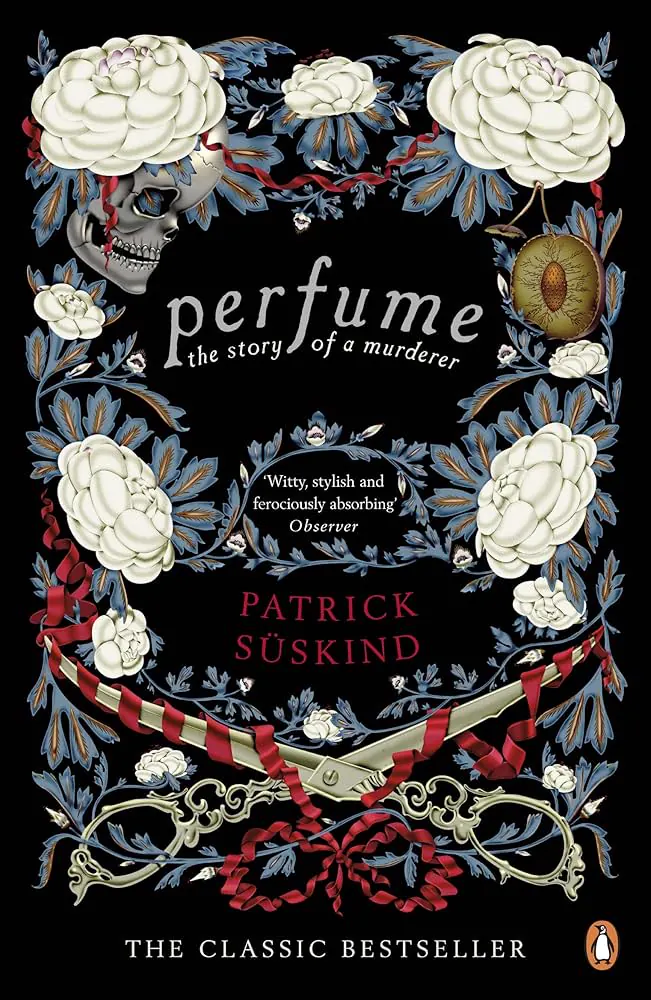
Cover of Perfume: The Story of a Murderer

Perfume

Patrick Süskind

first published
1985
language
German
mode
historical grotesque, obsession, horror

This is a book about beauty as extraction: the world is not admired by Grenouille so much as harvested. Its eighteenth-century France feels damp, crowded, rank, and alive in a way that makes scent more convincing than sight; everything moral has to pass through the nose first.

The horror works because the prose keeps granting his gift a terrible purity. He does not want love in any human sense; he wants the chemical key that makes love happen to other people. That turns art, murder, and performance into one single appalling craft.

Cover of Au revoir là-haut

Au revoir là-haut

Pierre Lemaitre

first published
2013
language
French
mode
postwar crime, satire, wounded spectacle

The war ends, and the violence simply changes costume. Lemaitre builds a France that knows exactly how to praise its dead while abandoning the living, then lets two damaged survivors answer that hypocrisy with an art scam so audacious it feels almost like justice.

It is grotesque in the most useful way: masks, monuments, bureaucracy, inheritance, money, faces remade and faces hidden. The book understands that public memory can be a marketplace, and that grief becomes especially dangerous when institutions learn how to decorate it.

Cover of The Count of Monte Cristo

The Count of Monte Cristo

Alexandre Dumas

first published
1844-1846
language
French
mode
adventure, revenge, identity theatre

The revenge is famous, obviously, but the real seduction is the patience. Edmond Dantès does not simply return with money and a grudge; he returns as an entire system, a myth engineered to move through Parisian society like fate in excellent clothes.

It is also a book about the cost of becoming your own instrument. Every disguise is thrilling, every trap exquisite, and then the machinery keeps asking whether justice still counts as justice once it has learned to enjoy itself.

Cover of One Hundred Years of Solitude

One Hundred Years of Solitude

Gabriel García Márquez

first published
1967
language
Spanish
mode
magical realism, family chronicle, circular time

Macondo feels less like a setting than a weather pattern that has learned everyone's names. The Buendía family keeps mistaking repetition for destiny, and the novel turns that mistake into music: births, wars, inventions, ghosts, plagues, and desires circling back with new faces.

The magic never feels decorative. It behaves like memory does: literal when it needs to be, impossible when accuracy would be too small. The result is huge and intimate at once, a family album where history keeps leaking through the paper.

Cover of Les Grandes Oubliées

Les Grandes Oubliées

Titiou Lecoq

first published
2021
language
French
mode
history, essay, recovery work

This is history with the missing lights switched back on. Lecoq writes about the women who acted, governed, made, fought, studied, organised, and then were edited into the margins by the story that preferred men as its default setting.

The force of the book is not just that it names forgotten figures. It explains the mechanism of forgetting: who gets recorded, who gets treated as anecdote, who becomes a helper in someone else's biography. It makes absence feel constructed, which means it can be challenged.

Cover of The Talented Mr. Ripley

The Talented Mr. Ripley

Patricia Highsmith

first published
1955
language
English
mode
psychological crime, imposture, desire

Tom Ripley is terrifying because he is not grand at first. He is needy, observant, humiliated, and hungry in a way that society has taught him to lacquer over. Then he discovers that identity can be worn if you are calm enough while stealing it.

Highsmith makes amorality feel almost domestic: luggage, letters, rooms, clothes, signatures, small lies placed neatly in a row. The suspense is not only whether Tom will be caught, but whether he can keep becoming emptier without losing his charm.

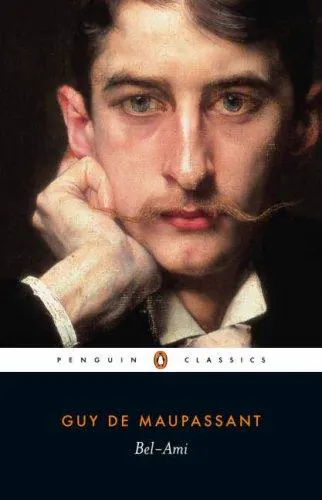
Cover of Bel-Ami

Bel-Ami

Guy de Maupassant

first published
1885
language
French
mode
social climbing, journalism, elegant rot

Georges Duroy rises because the world around him is already built to reward surfaces. He has appetite, looks, nerve, and very little interior furniture; Paris supplies the rest, polishing him into a useful ornament with excellent instincts for doors left half open.

The novel is deliciously cruel about media, money, sex, and power pretending to be refinement. Everyone understands the game more than they admit, and that is what makes Duroy's success feel less like corruption entering the room than corruption recognising a relative.

Cover of All Tomorrows

All Tomorrows

C. M. Kösemen

first published
2006
language
English
mode
speculative evolution, science fiction, body horror

It has the scale of myth and the bedside manner of a fossil record. Humanity gets stretched, redesigned, punished, adapted, and misunderstood across absurd lengths of time, until the familiar human shape becomes only one brief draft among many.

The horror is not just mutation; it is perspective. All Tomorrows keeps making the reader feel how tiny a body is beside deep time, then how stubborn meaning can be anyway. Even its strangest descendants carry the old problem with them: what survives, what changes, and who gets to call it human.