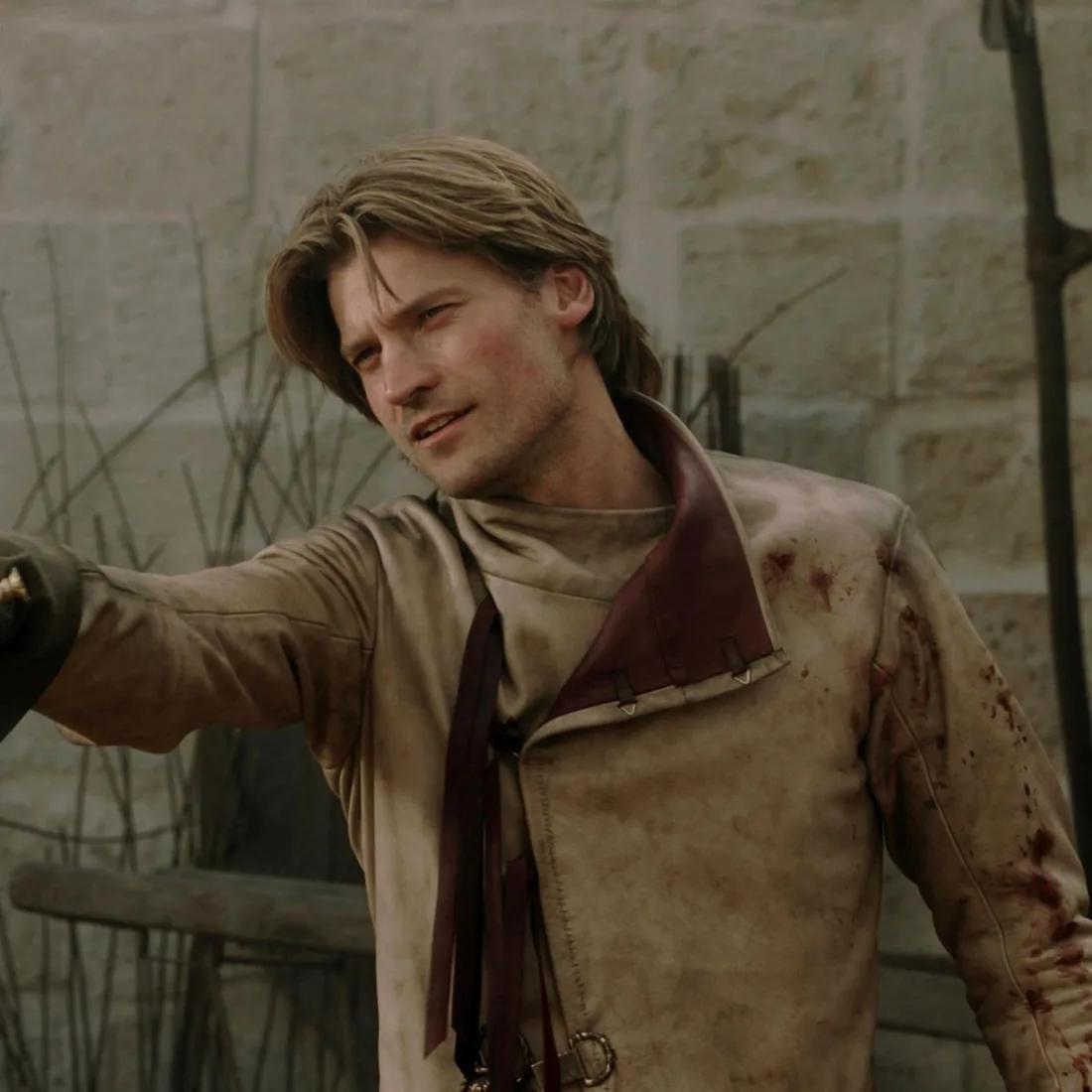
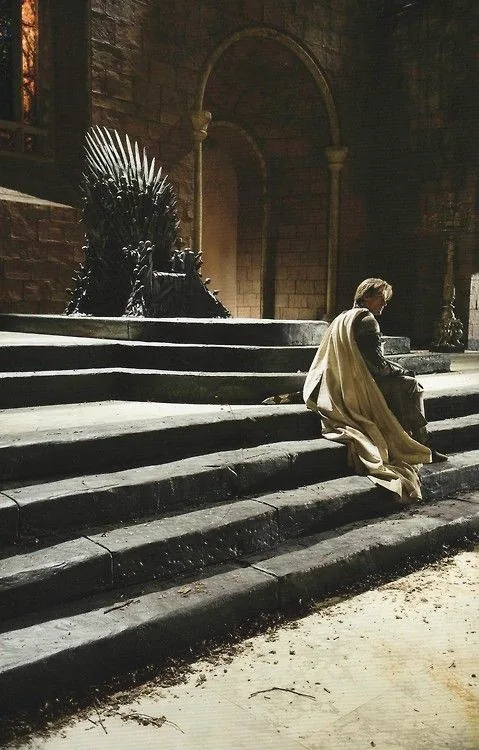
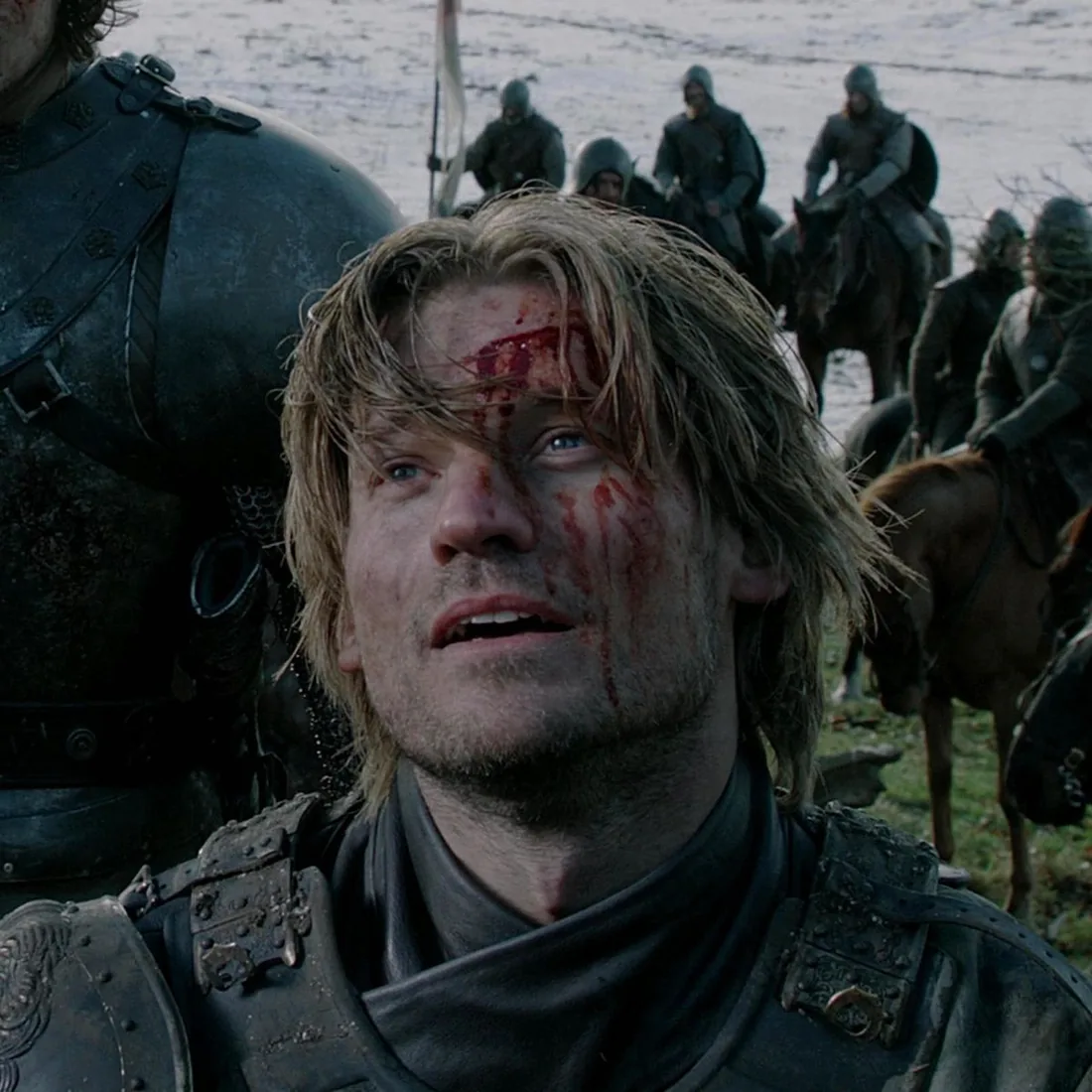
Jaime is the whole wound. He is arrogance, beauty, rot, tenderness, violence, shame, performance, and the single
worst PR problem in Westeros. I love that the great moral fact of his life is both true and unreadable from the
outside: he killed a king, and that should have made him a monster, except the king was Aerys and the alternative
was a city burning alive.
The title Kingslayer turns an act of mercy into a joke everyone spits at him. Then the story keeps asking
what remains when the pretty golden certainty is stripped away: sword hand gone, myth gone, no easy alibi left.
Jaime is fascinating because his best self has always been trapped under the worst story anyone could tell about him.
Tytos / Tywin / posterity as wound
Legacy, or the crime scene called Casterly Rock
The family name lives on.
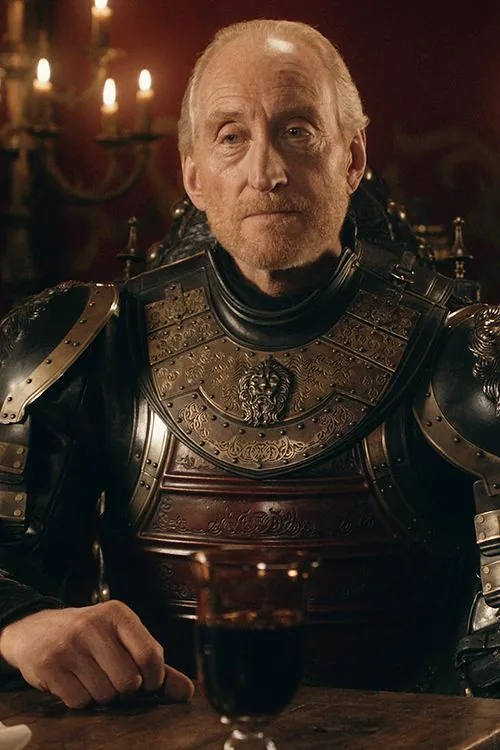
Tywin, Game of Thrones
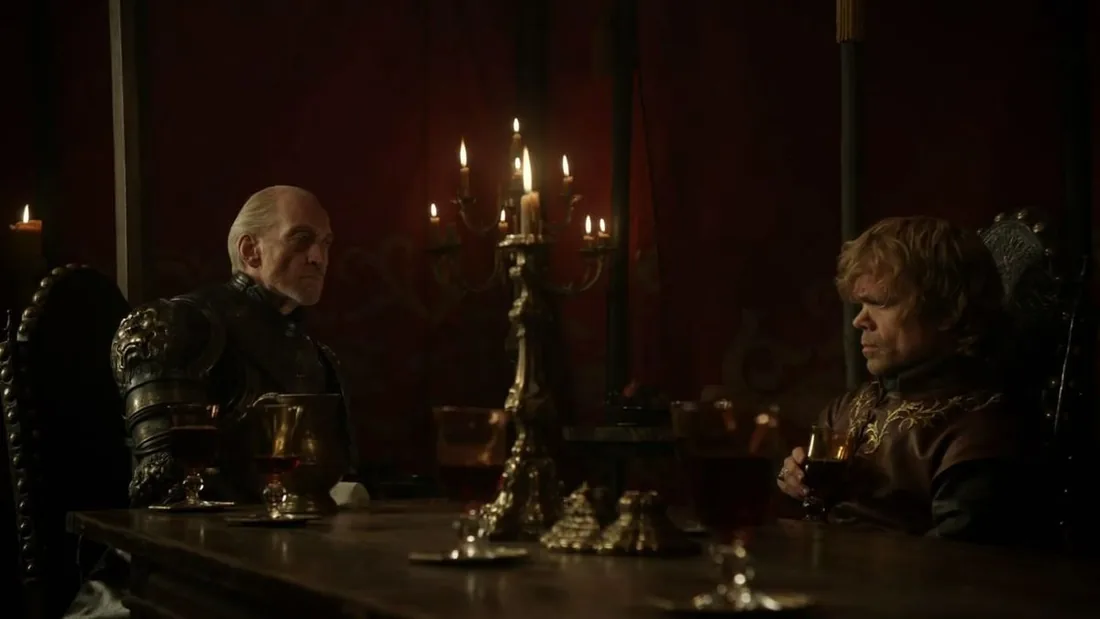
Tywin makes the most sense as a man who grew up watching softness become public humiliation. Tytos being generous,
forgiving, eager to please, and mocked for it does something catastrophic to the family imagination. Tywin does not
merely reject his father; he builds an entire moral system where being laughed at is worse than being cruel.
That obsession with posterity is everything. He wants the Lannister name to become architecture: gold, fear, obedience,
a song people understand as a warning without anyone needing to sing the words. And then, because the gods do enjoy
irony as a craft, he gets exactly three children and not one of them can carry the legacy cleanly.
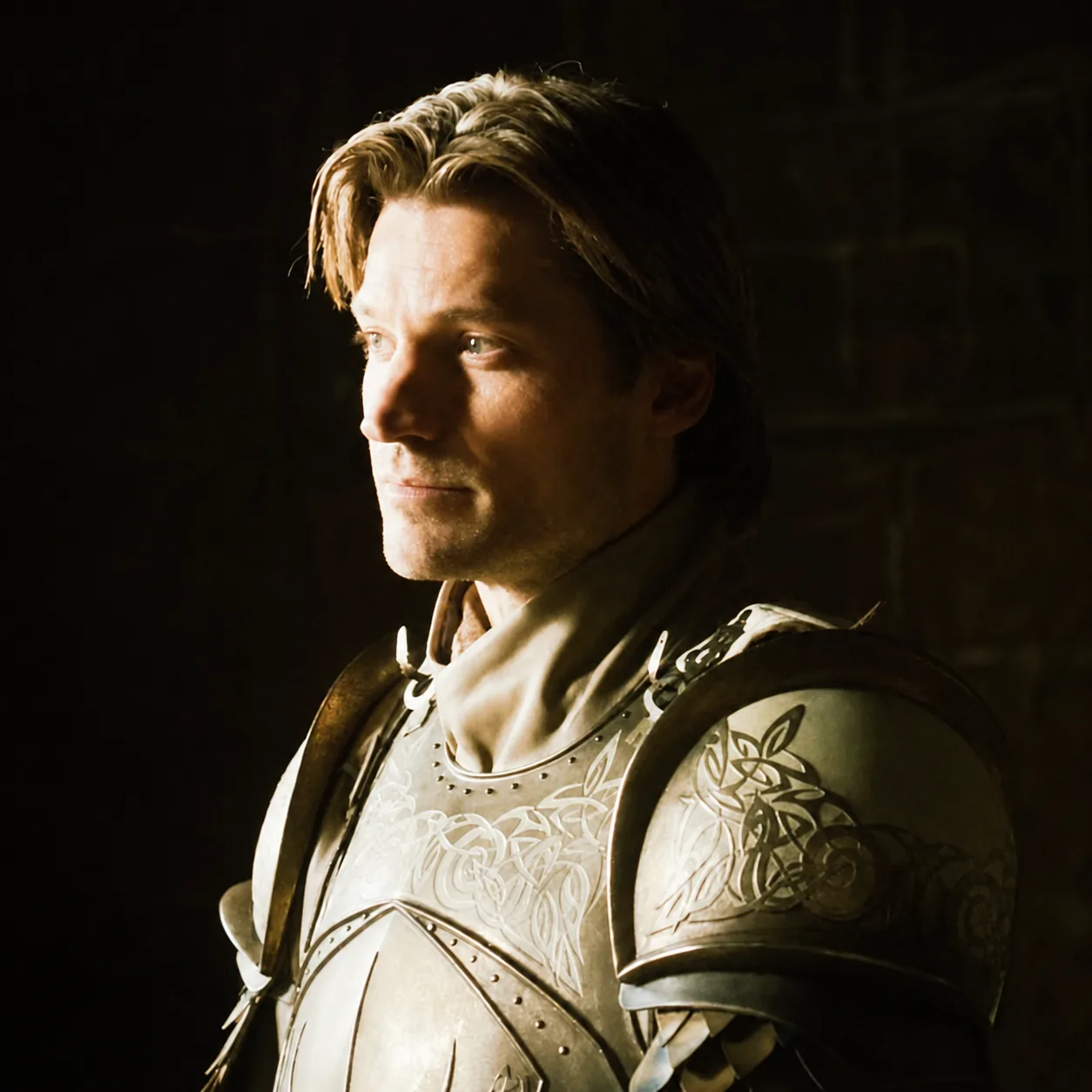
Jaime
Lost and dishonoured. The beautiful heir made useless by a white cloak, then made infamous for saving King's Landing when no one ever cared to ask why.
Cersei
Queen, cruel, furious, and convinced she is cleverer than she is. She inherits Tywin's contempt but not his restraint, which is such an elegant little family disaster.
Tyrion
The actually clever one. The strategist, the reader of rooms, the child most like Tywin, and still the imp, the dwarf, the stain on the Lannister name.
Never forget what you are.
Tyrion, A Game of Thrones
Aerys / Tywin / Steffon / the friendship that became a hostage situation
The king, the Hand, and white cloak
my overmighty servant
Aerys on Tywin, The World of Ice and Fire
The ugliest thing about Aerys and Tywin is that it starts almost well. Aerys, Tywin, and Steffon Baratheon grow up around court together: three heirs, three old houses, three boys
close enough that history later has to pretend this was ever going to end normally.
Young Aerys is charm, appetite, pageantry, and impossible plans. Young Tywin is discipline. Steffon is
the Baratheon hinge between them: cousin to the dragons, friend to the lion, father of the boy who will one day smash
the dynasty open with a warhammer. Tiny historical seed, enormous poisonous tree.
At first, the arrangement works obscenely well. Aerys becomes king and makes Tywin his Hand. Tywin is young, brilliant,
merciless, and already carrying Castamere around like a business card. The Seven Kingdoms prosper under his administration,
which is precisely the problem. Aerys wants to be remembered as great, but greatness keeps arriving with Tywin’s signature
on the paperwork.
That is the first real insult: usefulness becoming humiliation. The joke spreads that Aerys wears the crown while Tywin
rules the realm, so Aerys starts trying to prove he does not need the man who is, very visibly, keeping the floor from
collapsing.
Joanna makes the rivalry intimate. At Tywin and Joanna’s wedding, he takes liberties during the bedding. Later,
in front of court, he humiliates her with a comment about nursing the twins. It is not just vulgarity. It is a king
reaching into Tywin’s private life and proving there is no door rank cannot open.
From there, the friendship does not break so much as rot in public. Aerys overrules Tywin, blocks appointments, rewards
flatterers, and lets courtiers learn that mocking the Hand is now a safe indoor sport. When Ilyn Payne repeats the obvious
— that Tywin is the one truly ruling — Aerys tears out his tongue and calls the mirror treason. Very stable. Excellent
leadership. No notes from the small council.
Then Duskendale happens, and whatever was still recognisable curdles. Aerys walks into Lord Darklyn’s trap against Tywin’s
advice and spends half a year imprisoned. Tywin surrounds the town and threatens to storm it. Barristan rescues the king,
but rescue does not restore him. After Duskendale, Aerys stops merely resenting Tywin and starts believing in plots:
Tywin wanted him dead, Rhaegar wanted the throne, Cersei was waiting as the prize at the end of the conspiracy.
That is where Steffon comes back into the machine. Aerys reaches for the third boy from the old triangle because Tywin is
no longer trusted and Rhaegar is no longer safe in his mind. Steffon is summoned to court, placed on the small council,
sent across the sea to find Rhaegar a bride with suitably Valyrian blood. There are rumours Aerys means to replace Tywin
with him. Then Steffon dies on the return journey, shipwrecked in sight of Storm’s End, and Aerys folds even that into
suspicion. Naturally.
The Cersei refusal is the cleanest knife. Tywin offers his daughter for Rhaegar, for legacy,
bloodline, permanence, the Lannister name installed directly inside the future. Aerys rejects it as if Tywin has forgotten
his place: no servant’s daughter for a prince. Lannister gold may fund the crown. Lannister competence may run the realm.
But Aerys will not let the Lannisters become royal blood.
Then comes Jaime. The appointment to the Kingsguard is almost elegant in how vicious it is: an honour that functions as
confiscation. Publicly, Tywin has to accept the
honour. Privately, the line of Casterly Rock has just been cut at the prettiest possible point. Aerys does not
simply insult Tywin; he edits Tywin’s future.
Years later, when the war reaches King’s Landing, Aerys keeps Jaime close
because Jaime is Tywin’s son and therefore suspect, useful, punishable. Then he orders him to kill his own father while
wildfire waits under the city like a second crown. After all those years of trying to make Tywin smaller, Aerys ends by
trying to turn Tywin’s son into the instrument of Tywin’s death.
Instead, Jaime kills the king.
Tywin once knighted Aerys; Aerys later steals Tywin’s
knight for himself; then that knight opens Aerys’s throat. The friendship begins with a sword on a shoulder and ends with
a sword at a king’s neck.
The bill, finally coming due.
A Lannister always pays his debts.
House saying, A Song of Ice and Fire
sun / vengeance / inheritance with teeth
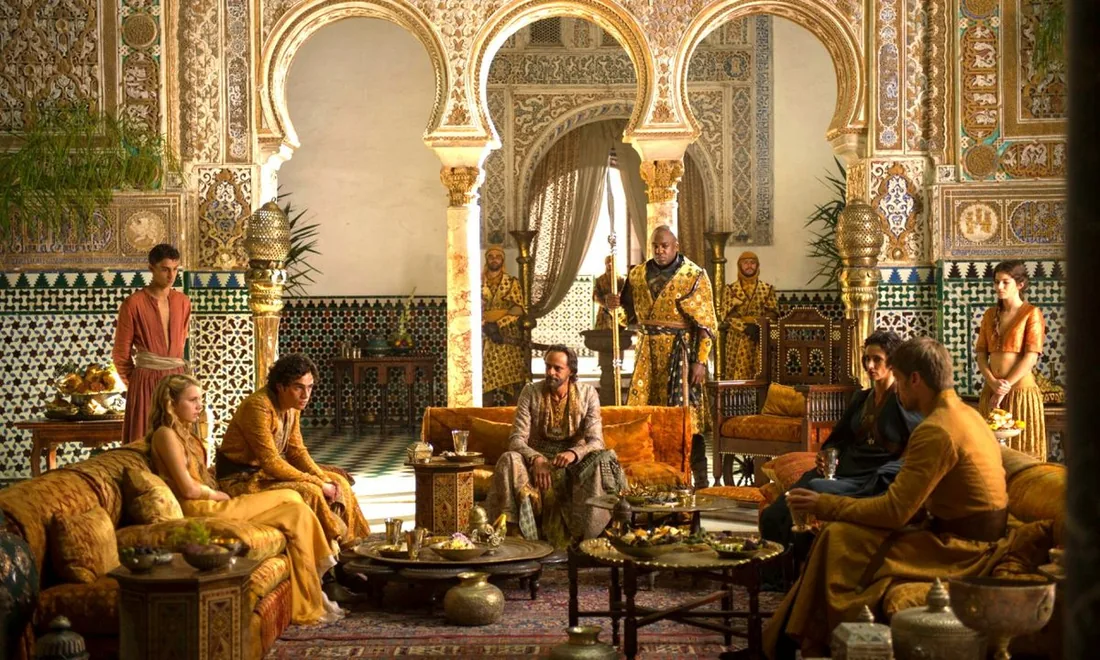
Dorne
Unbowed, Unbent, Unbroken.
House Martell, A Song of Ice and Fire
Dorne works because it refuses the dreary Westerosi assumption that suffering becomes nobler if everyone is cold,
repressed, and dressed like a wet wall. It has heat, colour, pleasure, memory, law, and the very civilised understanding
that revenge is still revenge even when served with citrus and excellent architecture.
The rest of Westeros treats desire like a leak in the roof: embarrassing, structural, best ignored until the ceiling
collapses. Dorne looks at desire and says, yes, obviously that belongs in politics. Love matters. Sex matters. Grief
matters. Insult matters. A murdered sister matters for decades, actually.
And then there are Doran and Oberyn. Same wound, opposite
temperature. Oberyn is immediate: bright, vicious, affectionate, dangerous, all silk and venom and unbearable charisma.
He enters a room like a thrown spear and somehow still has time to flirt on the way. He wants justice with a pulse under
his fingers, he wants the Mountain’s confession, he wants the old horror dragged into daylight where everyone can see
what was done to Elia.
Doran is the other blade: hidden, slow, wrapped in patience until patience starts to look suspiciously like paralysis.
He does not forget. He does not forgive. He simply moves at a speed that makes everyone around him mistake calculation
for surrender. It is fascinating, and also maddening, because he has the sort of mind that can hold a plan for seventeen
years and somehow still not manage one clear conversation with his own heir. Political subtlety: excellent. Family
communication: MIA.
Arianne is the cost of that silence. She is clever, proud, loved, and left to invent the plot from missing pages. Doran
thinks secrecy is protection; Arianne experiences secrecy as replacement. He hides the truth because he fears what she
might do with it, and by hiding it he creates exactly the daughter desperate enough to act without him. A locked door teaches people to pick locks.
Then there's the wasted possibility of a Oberyn/Cersei match.Cersei somewhere her gender is not treated as a cosmic clerical error, Cersei with sunlight,
inheritance law that does not automatically shove her behind Jaime, and a husband vicious enough to survive her without
needing to put her in a cage. That is one of the few alternate futures where she might have had room to become something
other than a weapon chewing through its own handle.
Oberyn is not gentle enough to be devoured by her, and Dorne is not built to punish her for wanting power in the first
place. But the match never happens, because Tywin refuses it and history keeps choosing the worst available door.
Cersei stays in the Rock, then goes to Robert, where her rage gets fermented into monarchy-grade poison. Oberyn goes on being
Oberyn: dangerous, brilliant, grieving, moving through the story like a lit match held too close to silk. Doran waits. Arianne
schemes. Elia remains the wound under all of it.
The Martells are not morally clean, because clean houses are usually boring and lying. They are proud,
secretive, reckless, patient past reason, and very capable of making a bad plan look gorgeous in the sun. But they understand
something the rest of Westeros keeps trying to bury under snow, steel, and inheritance charts: dignity is not the absence
of hunger. Sometimes dignity is remembering exactly what was taken, setting the table, and waiting until the person across
from you finally realises the meal was poisoned.
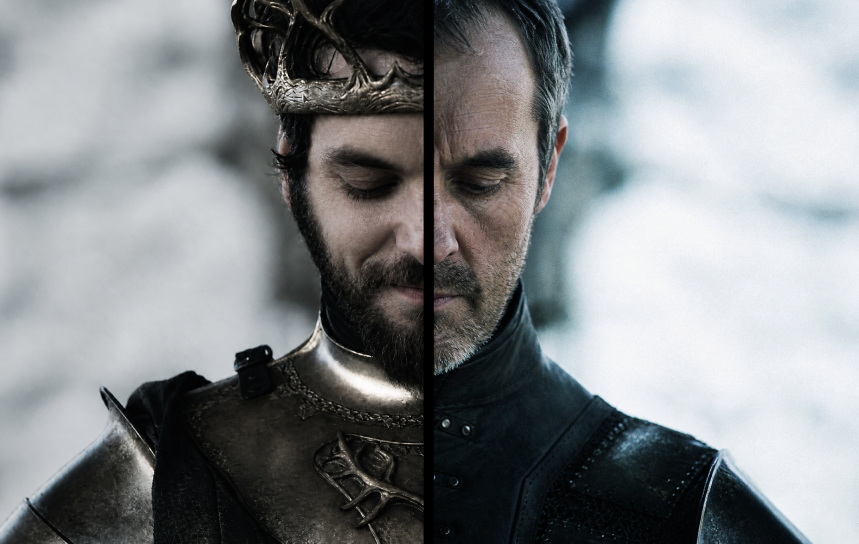
Renly / Stannis / the adult child
The Baratheon heartbreak
I did love him, Davos. I know that now.
Stannis, A Clash of Kings
The Baratheon tragedy is not that Renly was loved and Stannis was not. That would be too simple, and also too soft.
The wound is older and uglier: Stannis held Storm’s End while the Tyrells starved it. Horses gone. Dogs gone. Cats gone.
Honour reduced to rationing, duty with its ribs showing. Outside the walls, the Reach had banners, supply lines, green
abundance, and enough confidence to feast where the starving could see them.
Stannis did not forget because Stannis does not metabolise humiliation into charm. He stores it, files it, lets it harden
into law. The Tyrells were not an abstract political faction to him; they were the people who made hunger ceremonial.
And then Renly chose them; not just accepted their swords, not just made a necessary alliance, but wrapped himself in their
colour, their flowers, their pageantry, their easy talent for being adored. The brother Stannis kept alive behind starving
walls rode back into history dressed in the wealth of the men outside them.
That is the fracture. Renly’s claim is politically absurd but socially brilliant; Stannis’s claim is legally clean and
emotionally radioactive. Renly understands theatre. Stannis understands debt. So when the war comes, it is not only crown
against crown. It is siege memory against summer silk, it is a ledger no one else admits exists. Renly reaches for the
Tyrells because they can make him king. Stannis looks at the same alliance and sees the old table laid outside Storm’s End,
still full, still laughing.
flowers / heirs / knives in silk
The Tyrell arrangement
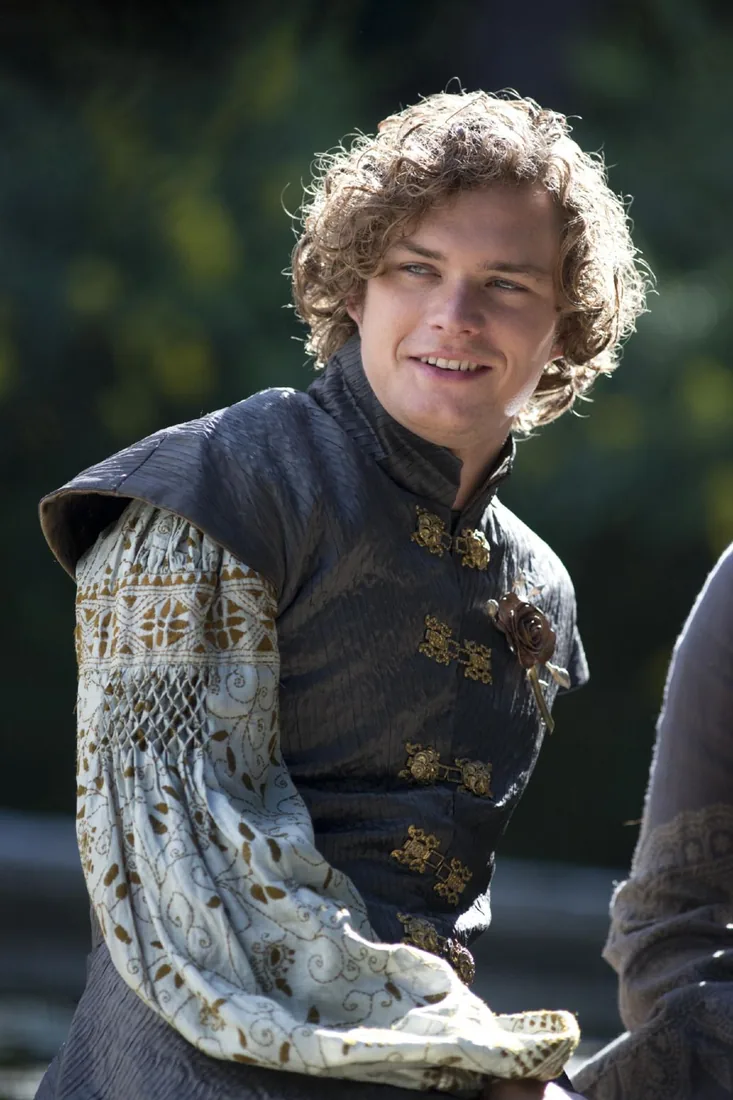
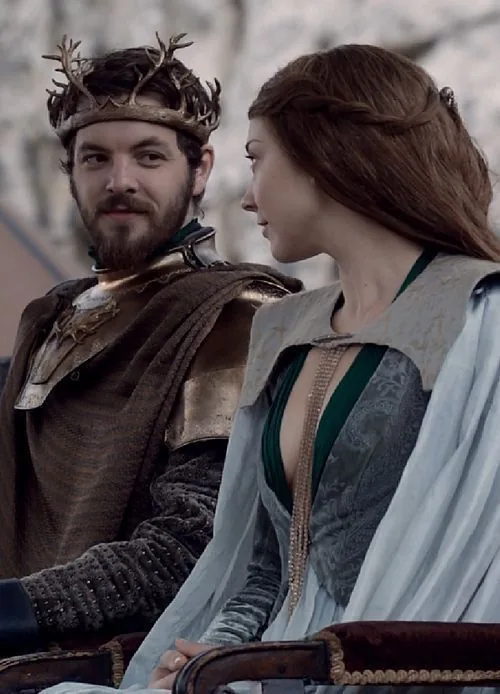
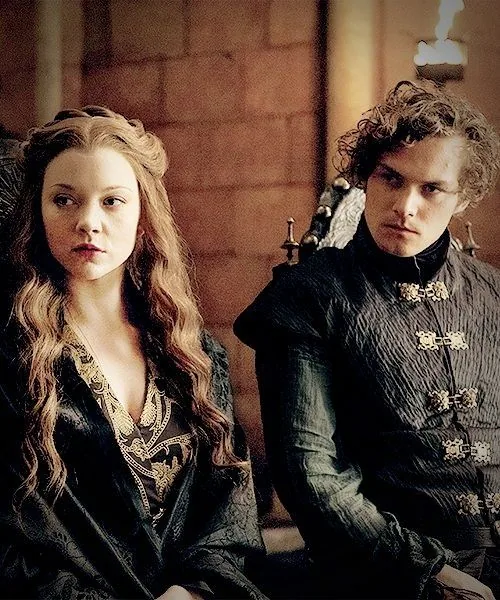
Loras and Margaery sharing Renly is one of those courtly arrangements that feels both tender and utterly practical.
Love is fine and well, but a king needs an heir; the Tyrells understand image, continuity, appetite, and plausible
deniability as if they were house gods.
Margaery is not a beard so much as a co-conspirator. Loras loves Renly; Margaery protects
the shape of the dream; the family turns affection into a campaign strategy and somehow makes it glamorous.
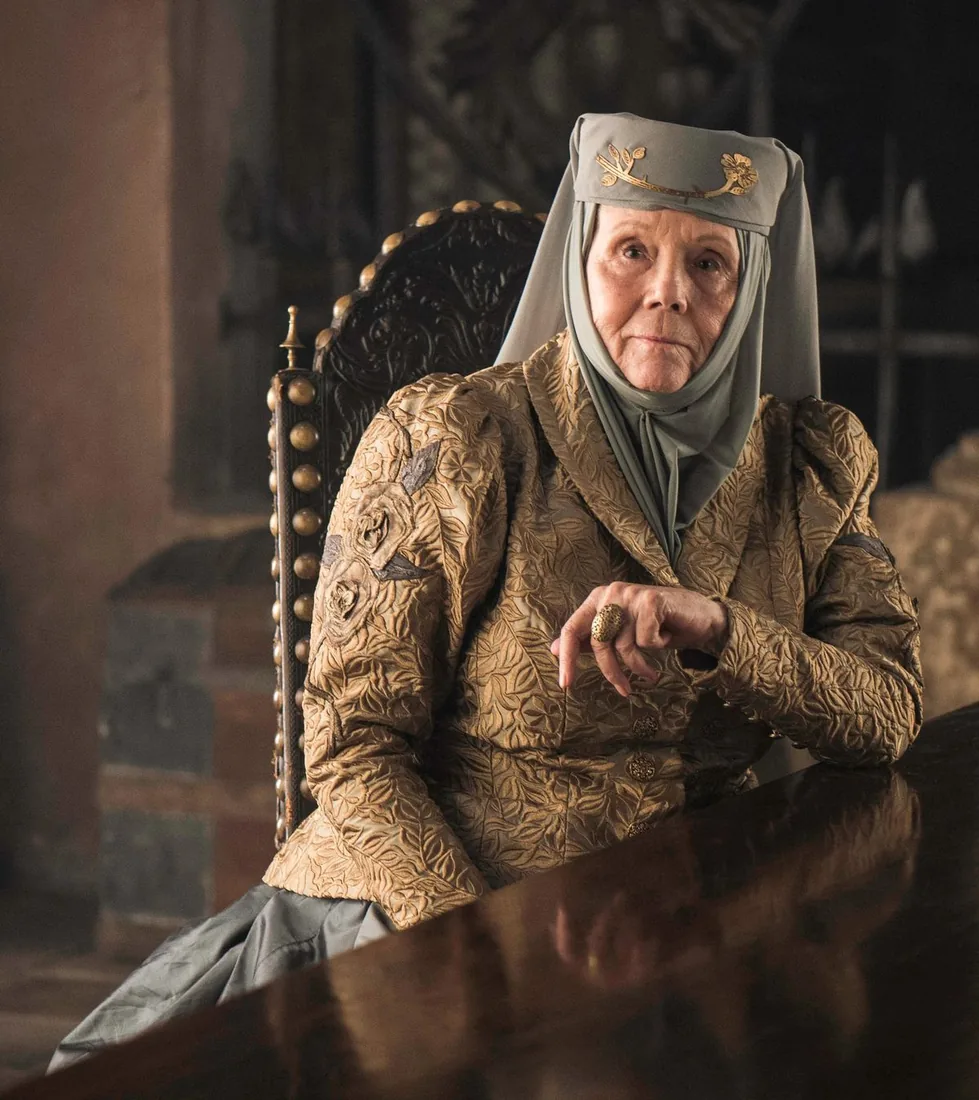
Olenna is what happens when someone survives long enough to stop pretending foolishness deserves patience. She is
funny because she is accurate, terrifying because she is calm, and iconic because every insult arrives already sharpened
by decades of watching powerful men mistake volume for intelligence.
She understands the court as theatre, garden, and battlefield all at once. She trims. She poisons. She calls it what
it is. The realm should have listened more often and thanked her for the pruning.
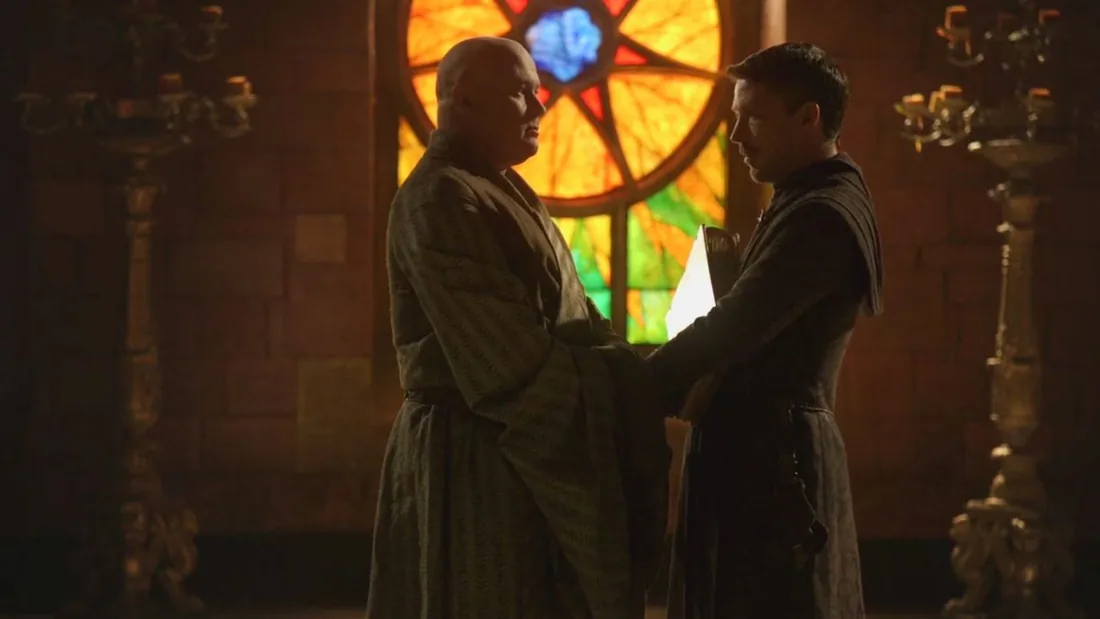
Varys / Littlefinger / Tyrion / useful minds
Players with knives behind the smile
Power resides where men believe it resides.
Varys to Tyrion, A Clash of Kings
Varys belongs here because he makes power feel theatrical and administrative at once. He understands that rule is
partly bodies in rooms, partly paperwork, and partly a collective hallucination everyone agrees to obey until the
floor gives way.
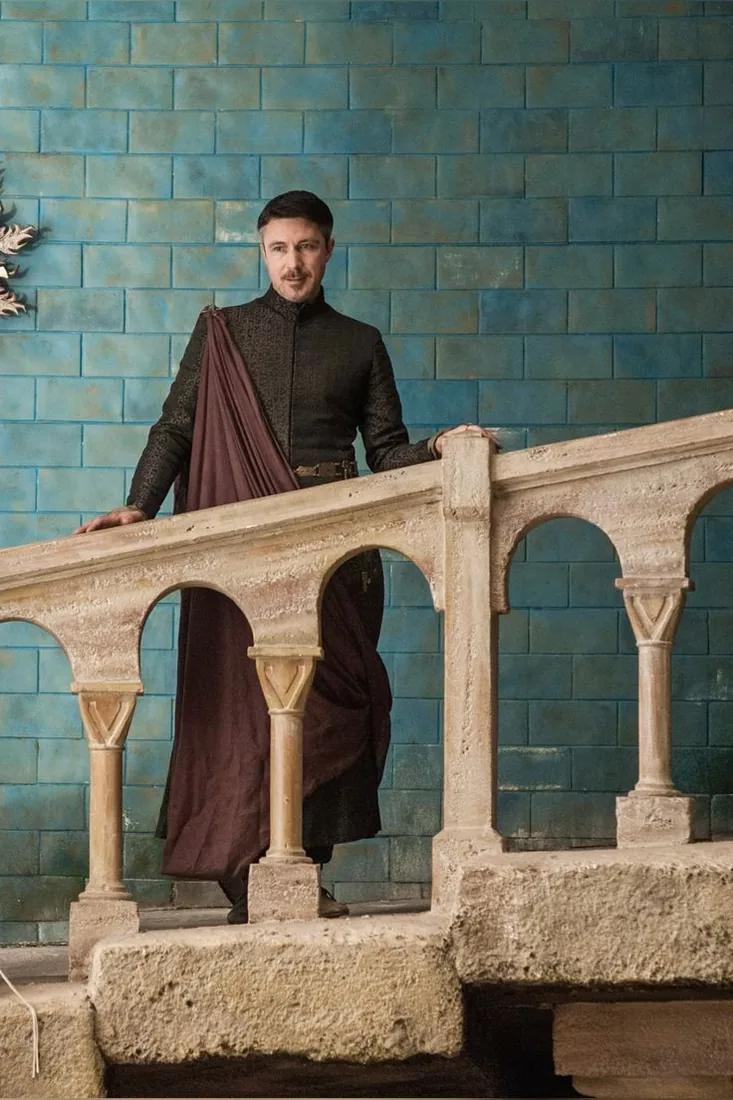
Littlefinger is upward mobility as a haunting. He is grievance with a ledger, a man who turns being underestimated
into infrastructure. The scary part is not that he lies; it is that he understands desire well enough to make people
walk themselves into the trap.
Tyrion is a different sort of mind: bruised, theatrical, funny because the alternative is collapse. He reads rooms
like survival depends on it because it usually does. He and Littlefinger both know information is power, but Tyrion
still wants, disastrously, for intelligence to mean something better than extraction.
Littlefinger on his own is insane in the most horrible, compelling way. What do you mean he climbed that high with no
army, no ancient throne, no dragons, no divine bloodline, just intelligence, charm, ruthlessness, financial literacy,
and a total willingness to turn every human attachment into scaffolding?
The Catelyn thing is the cracked bell underneath all of it. A crush calcified into mythology, humiliation fermented
into ambition, desire turned into a political operating system. He does not stop because stopping would mean admitting
the whole ladder was built over a wound.
What makes him so vilely good is that he understands scale. He does not need to win the battle if he can own the debt
beneath it, place the rumour beside it, marry the frightened heir after it, and make every lord believe the knife was
someone else's idea. He is not grand in the dragon sense; he is logistical. He is a spreadsheet with childhood trauma
and excellent coats.
And still, underneath all that polish, he is almost embarrassingly emotional. Not soft, never safe, but powered by an
old humiliation he has taught to wear perfume. He turns love into proof, rejection into doctrine, proximity into
ownership. The horror is that he can read everyone except the part of himself still standing in Riverrun, bleeding
from a duel he was never going to win.