Baldur’s Gate 3

A sprawling CRPG where “don’t push the button” is an invitation and every romance is technically a side quest with paperwork.

  • Competence as flirting
  • Villainy with schedules
  • Found family (armed)
  • Dice as moral hazard

Boardroom coup with a devil-shaped paper trail.

Patch Notes (Faerûn Edition)

  • Childhood DLC: sold off → devil-adjacent internship → came back with management experience.
  • Parents: patched with tadpoles; now “supportive.” Disturbing, yes. Efficient, also yes.
  • Deliverables: Steel Watch, city-wide mind Wi-Fi, polite threats on letterhead.

House style

  • Politeness as blade; NDAs as love letters.
  • Respects competence the way other people respect deities.
  • Smiles like he’s already scheduled your downfall for Thursday.

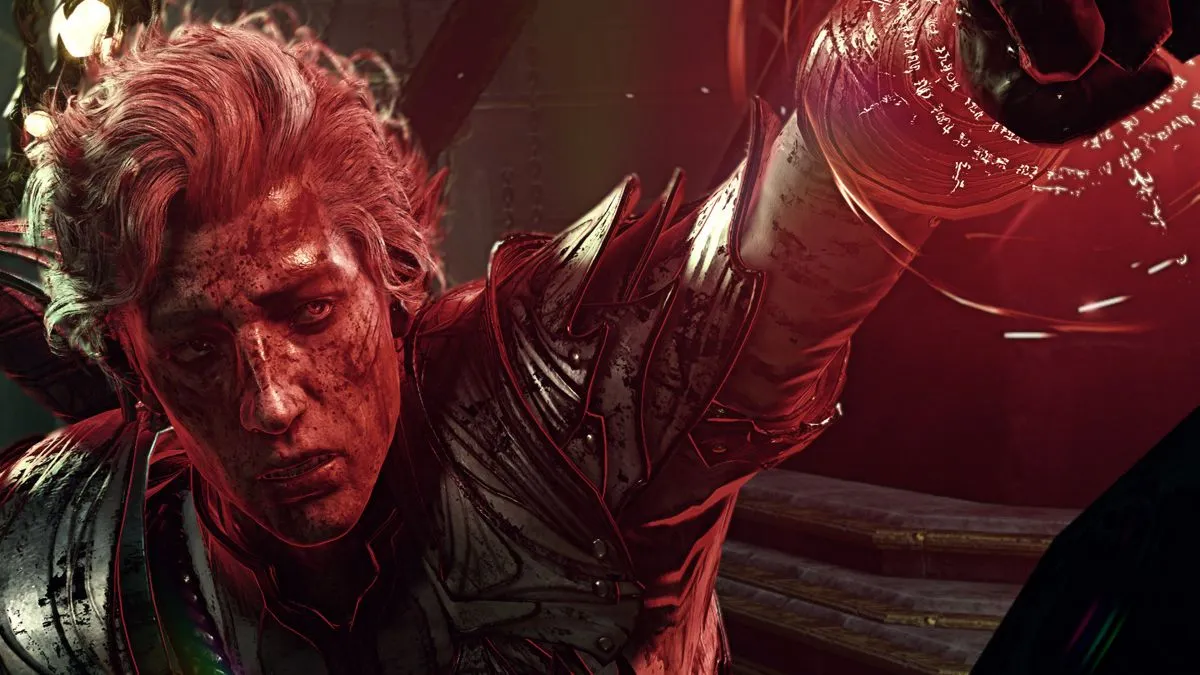
Enver Gortash, portrait
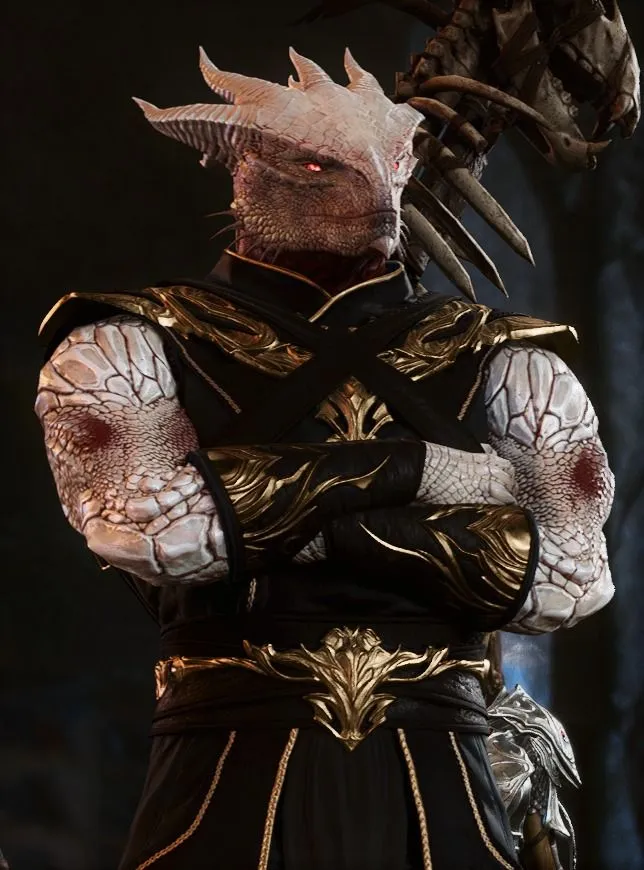
The Dark Urge, white dragonborn in black-and-gold armour, arms crossed.

The Dark Urge

Pop-up ads for murder. Close tab? Your call.

What matters

  • Amnesiac origin: the knife came first, the conscience arrived later out of spite.
  • Choices are the point: you can always speedrun character development while covered in evidence.
  • Understands strategy. Accidentally collects people.

Workarounds

  • Resist the urges: unlocks “conscience,” “camp awkwardness,” and “Withers is proud of you (probably).”
  • Lean in: unlocks “drama,” “excellent cloak,” and “oops, a legacy.”
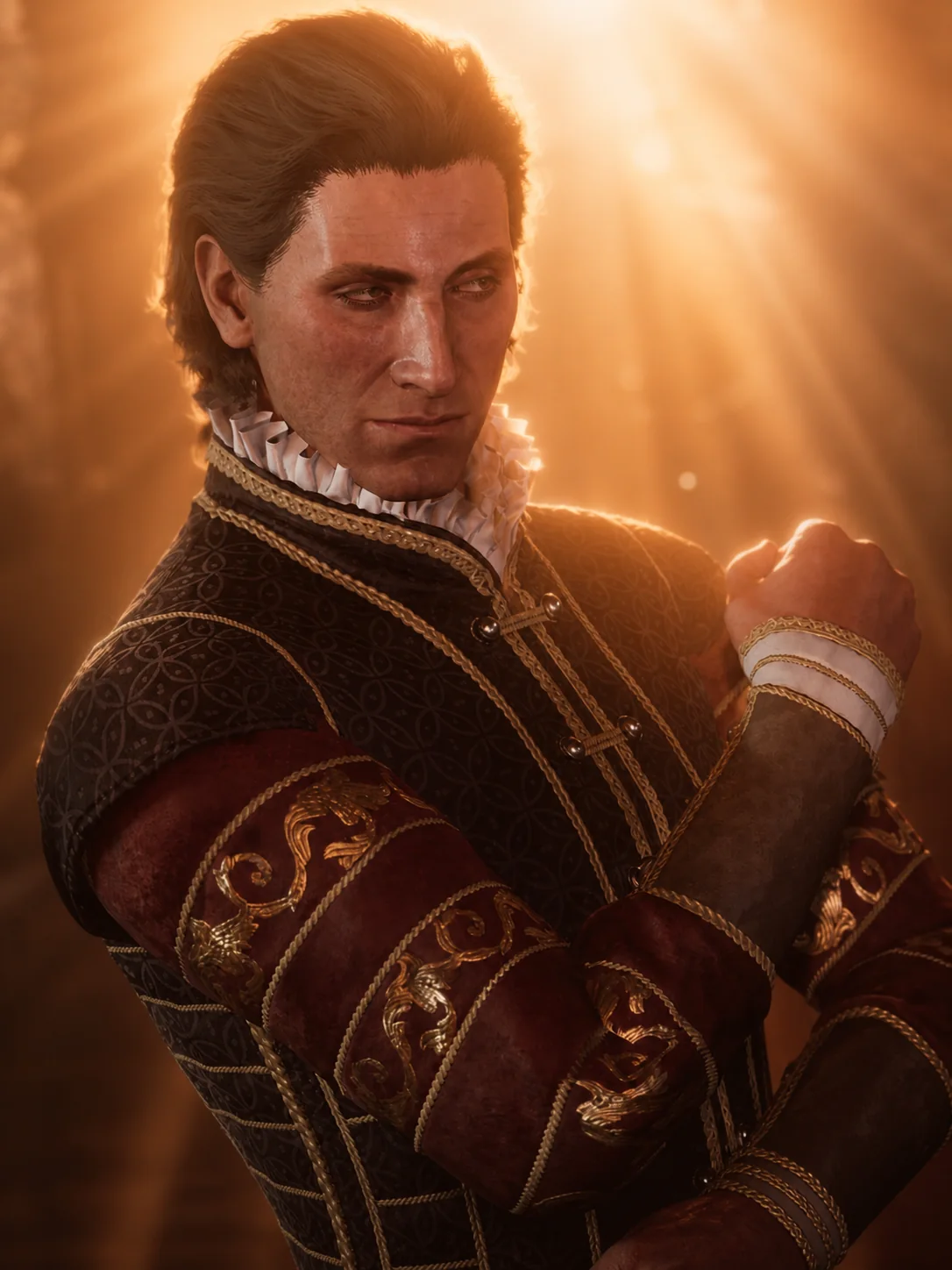
Astarion

Vampire spawn with 200 years of customer-service voice.

Known issues

  • Work history: Cazador’s unpaid internship (eternal).
  • Skillset: stealth, snark, knife literacy.
  • Questline lets you break the cycle or ascend and become the HR memo.

Field notes

  • Flirts like a lockpick: deft, slightly illegal, often successful.
  • Sunlight and sincerity both require sunscreen.
Shadowheart, cleric of Shar, half-lit and entirely judging you.

Shadowheart

Cleric of Shar, memory on a timer, moonlight in the patch notes.

Known issues

  • Shar by default; may drift Selûne if you demonstrate “basic kindness” and “not being a ghoul.”
  • Axis: night, light, and the audacity of choice.
  • Specialises in barbed honesty with a ribbon on it.

Field notes

  • Talks like a locked door; opens like a library.
  • Will save you, then critique your plan in the same breath.
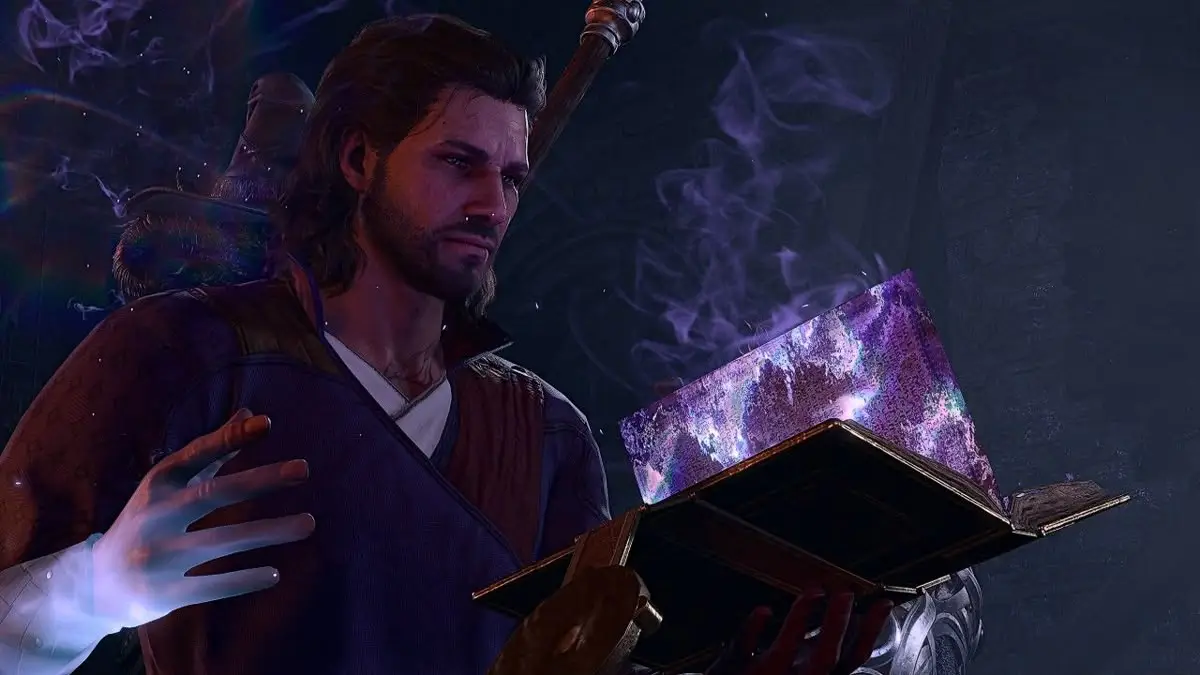
Gale of Waterdeep

Ambition with pastry. Can become a god or make you dinner.

Settings

  • Wizard extraordinaire; carrying a volatile Netherese artefact like it’s an accessory.
  • Endgame ambitions include: ascend with the Crown, or choose you above godhood and live deliciously mortal.
  • Mystra complications. Capital C. We are not taking questions at this time.
House style

  • Flirts in footnotes, loves in paragraphs.
  • Heroic options: bake, boom, or both.
Gale, bathed in violet light, eyes reflective and absurdly romantic.
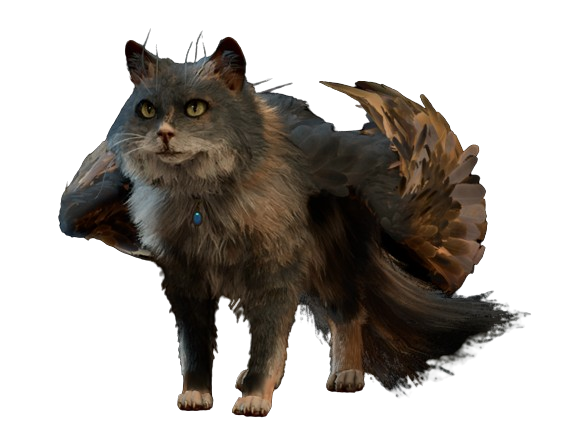
Tara the tressym: smug, winged, and judging your spell slots.

Minthara

Lawful Hostile; treats conquest like brunch reservations.

Known issues

  • Job title: Absolute commander; hobbies: war, vengeance, victory.
  • Recruitable if you pass the interview (competence, conviction, small war).

Field notes

  • Speaks in decrees; naps with a sword like it’s a pet.
  • Finds your compassion confusing and, tragically, endearing.

Party Config: Vibe Check & Camp Duties

  • Gortash

    Vibe: hostile LinkedIn.
    Love language: signed alliances.
    Critical fail on: whimsy.

  • Dark Urge

    Vibe: homicide, but make it sexy.
    Love language: sharp objects.
    Critical fail on: white carpets.

  • Astarion

    Vibe: flirty felony.
    Love language: validation, jewellery, your blood in a cup.
    Critical fail on: honesty and daylight.

  • Shadowheart

    Vibe: goth HR.
    Love language: bandages and judgement.
    Critical fail on: unlabelled relics.

  • Gale

    Vibe: dissertation with sparkles.
    Love language: grand gestures and good soup.
    Critical fail on: sussur bloom.

  • Minthara

    Vibe: conquest chic.
    Love language: victory reports.
    Critical fail on: small talk.

DIFFICULTY
CLASS
10

Persuasion

Click dice to roll
Enver Gortash

You came. Good. I was about to send what's left of the Watch to fetch you, and that would’ve spoiled the mood. We’ve done impossible things, you and I. I’d prefer we keep doing them together.

Enver Gortash

Since the brain fell, you’ve been…different. Unburdened suits you. We’ve walked darker roads together than most can imagine—and we did it well.
The pride is real; the calculation is, too. He always does both.

Enver Gortash

One more line item. Not business.
His gaze doesn’t flinch; for a breath he looks like a man, not a title.
I’m glad you lived. The Gate runs cleaner with you in it. So do I.

Enver Gortash

You’re… vibrating. That’s new.
He studies you like a strange artifact that might either bless a city or detonate it.
All right. Say the thing before your bones rattle out of your skin.

Gortash letter — origin

A child gets sold (sold!!!) to pay off his parents’ debts—literal ledger entry turned into a boy—and instead of dying small and quiet, he jailbreaks his own life and drafts a business plan for tyranny. Not a demigod’s darling. Not a famous war hero. Just a street rat who decided the pavement should salute him.

He doesn’t get a blood-line Uber to power like the Dark Urge being Bhaal’s problem child—preloaded with murder DLC. He doesn’t respawn as an undying war-general like Ketheric. He gets chosen by Bane the hard way: competence, cruelty, and an absolutely deranged work ethic. Promotion by results. CV reads: “Built order from zero; references available upon coercion.”

Gortash is not a mythic accident—he’s deliberate. The boy nobody wanted becomes the man every city law has to reckon with. He’s the executive version of spite.

Bane clocked it and said: yes, that one. Put a crown on the hunger.

And Bane would recognise that hunger. Who better? The god who himself rose from mortal ambition when Jergal handed off the big, ugly portfolios—tyranny here, murder there, death over yonder. Except this time there’s no bored scribe of the dead to abdicate nicely. If left unchecked, the boy would have to claw his way to godhood. Better to collar him with a mortal crown than risk him reaching for a halo. It’s strategic: a deity seeing his own origin story in a sharper, nastier mirror and deciding to leash it.

He starts as collateral and ends as a boardroom apocalypse in brocade. He’s the Silicon Valley of evil, but with better tailoring: iterate, scale, dominate. An orphan story speed-run where the fairy godmother is Bane, turning up not with a wand but with a contract and curfew, swapping the glass slipper for iron greaves and a compliance programme. “You may go to the ball,” he says, “but you’ll own the ballroom, and you’ll do it my way.”

Gortash — hell as school

Parents: bad at parenting, worse at ethics. They don’t see a child; they see a debt to liquidate. Then enter Raphael, and off he goes to Avernus, the world’s nastiest boarding school where the curriculum is betrayal, the uniform is scar tissue, and the principal eats souls for brunch.

He doesn’t learn trust there; he learns its market price. In hell you don’t share secrets—you securitise them. Every kindness accrues interest. Every debt comes with a clause you didn’t read because you were busy bleeding. He’s literally forged in hellfire: heat, pressure, hammer, repeat, until the soft parts decide softness is a luxury he can no longer afford.

Then he escapes. First breath of real air; first sky that isn’t on fire; first silence that isn’t crowded with claws. Freedom—gorgeous, stupid, breakable thing. And he understands immediately that freedom without power is just the warm-up to being owned again. People don’t climb ladders—they stand on faces and insist it’s networking. He knows because his face has footprints.

If you don’t have power, your liberty is just a sunny day between storms.

So he builds weather.

If hell taught him contracts, the world will get contracts sharpened to a point. If hell taught him hierarchy, the world will get a pyramid with his name carved at the apex. One step at a time, one deal at a time, the boy who was stepped on becomes the man who writes where everyone else is allowed to stand.

Except power begets patrons. And patrons beget prices.

Look closely: there he is again, at someone’s feet. Bane’s. Of course being a god’s Chosen comes with perks; of course the lift is faster when Tyranny’s CEO presses the button for you. But Chosen by the god of tyranny means learning the second edge of the sword: you can tyrannise the world, and still be tyrannised by the standard you wield. The leash is designer; it’s still a leash. The crown is heavy because there’s a hand on it that isn’t yours.

It would be funny if it weren’t so neat. Raphael taught him to weaponise a promise; Bane teaches him to industrialise it. The devil writes the contract; the god stamps it. And somewhere between those signatures, the boy who once wanted to be untouchable notices he is, once again, owned.

And then he meets the Dark Urge—another creature built by a god’s appetite. Someone who has never known freedom either, who moves through the world like a blade. Bhaal’s will in a person-shape. Gortash recognises the architecture: he is Bane’s fist; Durge is Bhaal’s knife. Instruments. Implements. Evidence that the divine loves a tool more than it loves a man.

But here’s the hairline crack in the doctrine: standing next to the Urge—someone who takes so much and wants so much more—he can finally see the outline of a life that isn’t just being wielded. If there’s a word for that outline, it’s hope.

If the Bhaalspawn is more than carnage, if the Dark Urge can step outside the script even once, then maybe Gortash is not doomed to be just the extension of another’s will. Maybe there’s something beyond survival—something beyond the endless game of climbing and crushing.

But of course, hope is foolish in hell and politics both.

The theatre of being obeyed

The theatre of being obeyed: how Gortash manufactures legitimacy

Gortash doesn’t just seize power; he costumes it. The Archducal Coronation isn’t a meeting—it’s a ritual with paperwork, perfume, and bouncers. You don’t get into Wyrm’s Rock by “being a concerned citizen.” You present a literal Admission Pass—signed by the man himself and, hilariously, scented with vanilla and rosewood. Legibility as luxury; access as aroma. The city learns that obedience can arrive on embossed cardstock.

Mechanically, this pageant launders force into legitimacy. The fortress is locked behind procedure (passes, checkpoints, “see the nice guard at the gate”), and the Patriars are staged as audience and amplifier—nobles whose job, historically, includes electing dukes and rubber-stamping authority. Even when you sneak or steal your way in, the fiction stands: the city’s elite “approve,” the drawbridge lowers on cue, and power looks tidy enough to applaud.

Theatrical gating is the point. You can brute force Wyrm’s Rock, but the game keeps nudging you towards the invitation—towards consent theatre. The message: legitimate power provides a door; only criminals climb the walls. Gortash makes you queue for your own subjugation.

You can even miss the spectacle entirely if you undercut his machinery first—destroy the Watch or raid his prison, and the velvet comes off the knuckles. Pageant is conditional on compliance.

Now mirror that against Raphael’s House of Hope. Different words, same grammar. You don’t simply stroll into Avernus; you perform a ritual, pass through a curated portal, and arrive in a velvet-gloved prison whose entire architecture is contract law with chandeliers. The props do the talking. Gortash’s pass smells expensive to launder the coronation into culture; Raphael’s ritual smells of incense and old coin to launder extortion into destiny. The House contains “Eternal Debtors”—souls reclassified as paperwork—and even within the House you secure more access via internal passes and permissions. Gate upon gate; consent upon coercion. A devil would clap at Wyrm’s Rock.

Both spaces aestheticise control. Both sell the idea that if your name is on the list, you are safe. You aren’t. The same nobles who clapped for order become bargaining chips when the curtains close. Theatre ends; policy begins.

And the thing is, the more you participate, the more real his power becomes. You validate the ritual to move through the city; you accept the scented ticket; you take your seat. The trap isn’t the drawbridge; it’s the applause.

So why do they clap? Because he makes rule look like invitation: a perfumed pass, a smiling usher, a chorus of Peers. But the real constitution is backstage—contracts in Avernus, clockwork in Baldur’s Gate. That’s the trick Avernus taught the boy who would be Archduke: if you stage power beautifully enough, people will queue for their own restraint.

P.S. Gortash literally fragrances his coup. Of course he does. If Raphael taught him anything, it’s that hell looks nicer in candlelight.

The subtraction of Enver

The subtraction of Enver (or, how a boy deletes a name)

Start at the cobbler’s: Flymm’s Cobblers in the Lower City, all leather stink and debt talk. That’s the surname he’s born under—the one that hawks shoes and sells a son.

He buries Flymm yet keeps it where it’s useful: Flymm’s Cobblers as a stage for the parental myth; Flymm Cargo as a literal waypoint in his supply chain. The family brand survives as an address and a loading bay, while Enver—the person—gets collapsed into function. The city can still find Flymm on a map; it can’t find Enver in a sentence

He takes Gortash like a blade takes an edge. The paperwork that matters—passes, proclamations, invitations—are signed “(Lord) Enver Gortash,” but notice how everyone uses it in the wild: Gortash to his face, Gortash behind his back, Gortash in the headlines. Karlach talks about a “guy named Gortash,” she means the system, the betrayal, the machine; Orin spits Gortash, the Peers toast Lord Gortash.

That’s the trick—turn the person into the office.

It's deliberate craft. Enver Flymm sounds like a child you could scold. Enver invites diminutives—little Enver, the lad from the cobbler’s, the boy who was owned. Gortash is a door that shuts mid-syllable. It’s a brand, an office, a wall you address with your hands behind your back. He discards the house name that failed him, then starves the forename that humanises him. By the time the city has to speak to him, it’s trained to say title + surname only. (Even the scented coronation pass knows its place: inked by Gortash, not by “Enver”.)

The only mouths that actually form “Enver” are the ones he’s silenced.

At the shop, while they’re tadpoled, his parents parrot the party line—“Be very welcome… home of our Archduke Enver Gortash!”—full name as signage. Kill the puppets and cast Speak with Dead, and the tone drops to bone: “Sally… Flymm… mother of… Enver Flymm… Gortash…,” “Enver… got his… revenge…,” “Enver… came to us… forced worm… into our heads…” First name appears only when the past can’t threaten him. Living mouths say Gortash; dead ones remember Enver.

This is what self-invention looks like when you don’t trust the world to pronounce you correctly. Keep the Flymm signage where it’s useful; keep Enver on formalities, where it can’t be wielded against you; teach the city to use Gortash as an interface, a command-line prompt, a controlled vocabulary. If you’re addressed as a role, you can respond as a system.

There’s tragedy in it, if you tilt your head. He becomes someone nobody can call by the name his mother used. Enver is the part of him that might’ve wanted to be called for dinner; Gortash is the part of him that makes sure dinner signs an NDA.

TLDR: The only people who say “Enver” are the ones he turned into exhibits. Everyone else mouths the title. The man becomes a function; the function eats the man.

Franc Peartree & Lady Jannath

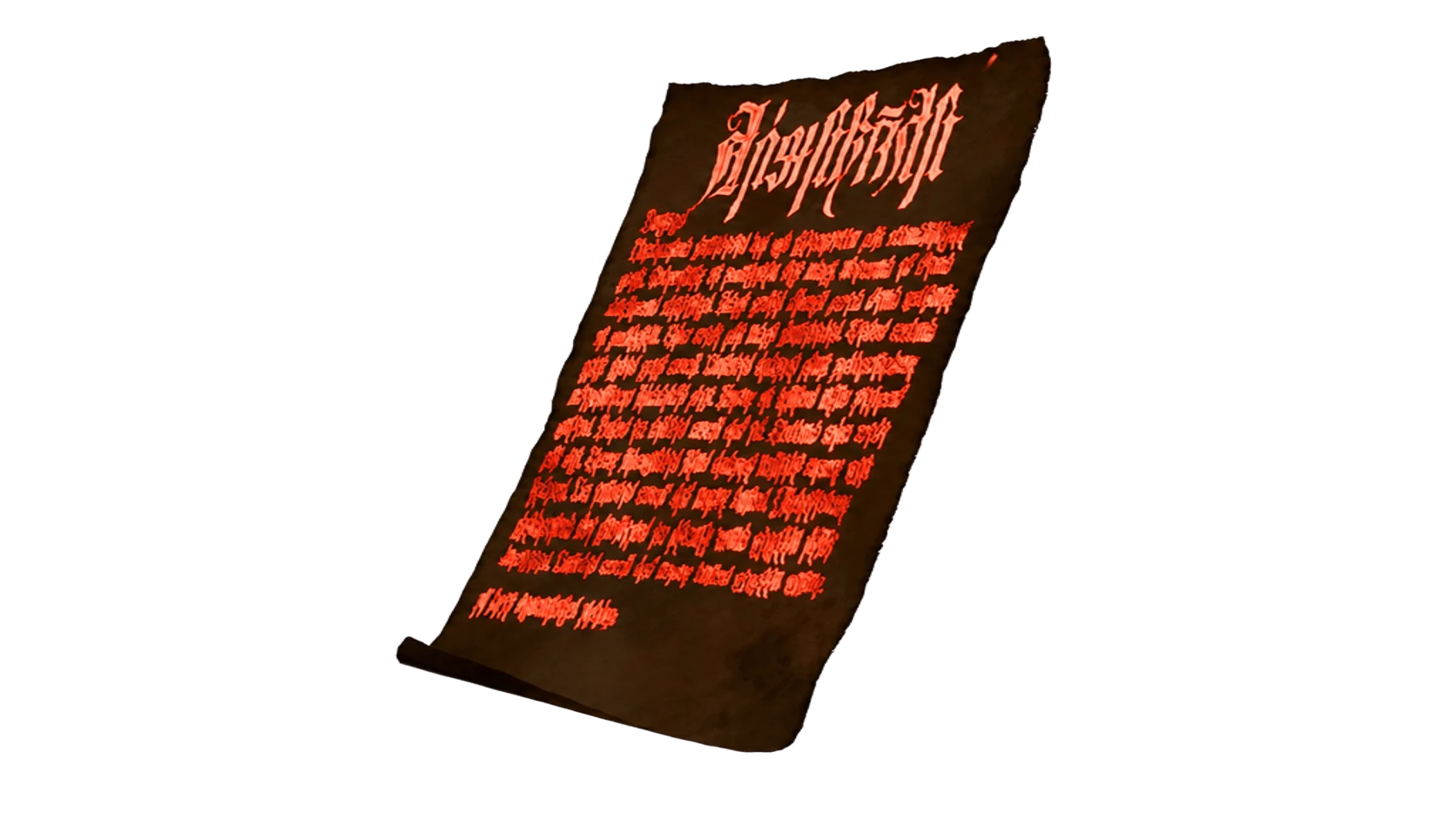
Background: I was loitering on Gortash’s wiki page again (my natural habitat) and dug up the old Act III letters to Franc Peartree—the ones before they were rewritten. I can’t stop thinking about them. They’re not memos; they’re performance pieces. Franc himself is canonically a weapons middleman who ends up very, very dead; his whole existence is a footnote in Gortash’s supply chain, which is exactly why these letters are so revealing.

Start with the courtship. “Dear Mr Peartree… I like your house.” The pitch is neighbourly, then sideways: the house “could be improved,” and so could Franc’s prospects—by moving a “tremendous quantity of infernal iron.” It’s sales copy dressed as flattery, a velvet nudge from polite to felonious. He frames distribution as a tasteful home improvement and asks Franc to “add me to those contacts.” That’s mob language with stationery—seduction via logistics.

Then the mask slips and he drops the “Mr.”: “Dear Franc.” The tone sprints from urbane to giddy. He thanks him for putting weapons into “groping, willing fingers” and, in the same breath, declares love—“any man willing to birth a little more slithering, wet malice into the world.” It’s obscene and weirdly affectionate, a love letter to function rather than person. He loves a vector. He’s not in love with Franc; he’s in love with what Franc makes possible. The tenderness is the trap.

Then there’s the parenthood imagery. “Like a parent saving their drowning child: swimmingly.” That’s grotesque, yes, but it’s also revealing: he recasts weapons distribution as an act of rescue. The child here is the project—his will—hauled from the water by Franc’s helpful hands. In the same paragraph he upgrades the metaphor from rescue to reproduction: “birth a little more slithering, wet malice.” He’s fusing nurture and manufacture, turning violence into something tender, coaxed, loved into being. It’s obscene—and very him. He doesn’t just mechanise evil; he domesticates it.

Even the sign-off—“Yours in faith”—is shrewd. It baptises the business. He isn’t just selling weapons; he’s officiating a creed and enrolling a congregant. The letter plants a tiny cult in Franc’s chest: you are not merely my contractor; you are my believer, and believers don’t defect. In the Peartree house, the altar is a writing desk and the sacrament is infernal iron.

Put the two leters side by side and you get a miniature arc: courtship → consummation. First he identifies appetite and offers a role; then he rewards complicity with intimacy, word-petting a smuggler into thinking he’s cherished, even chosen. It’s funny, yes, but it’s also frightening because it reveals how he binds people: not just with fear, but with delight. He makes crime feel like being seen, being loved.

And look at the target. Franc isn’t a peer in the salons; he’s a fixer who used to cook in the barracks, then graduated to the “colourful dimension” and died for it. Gortash’s weapons conduit, later a name on a Bhaalist kill list; his home becomes a crime scene museum. The letters sit in that house like a thesis statement: this is how the city is built—on men convinced they’ve been seen, cherished, necessary—and then made replaceable.

People argued the rewrite made the letters more “in character.” I disagree. These originals are the most in character thing we have: Gortash enjoying himself. He’s not dry; he’s delighted. He doesn’t merely tolerate wickedness; he believes wickedness can be elegant. And he writes to make you believe it too, to invite you into the silk lining of a monstrous coat. That’s why the cadence sticks.

He isn’t confessing love; he’s defining it. Love is obedience that scales. Love is a city whose veins run on infernal iron and whose hands are always already “willing.”

By the time he says “I do love you, Franc,” you realise he means “I love what you let me do.” And he writes it sweet as sugar so you’ll love it, too.

And then there’s Lady Wisteria Jannath—not a correspondent but a witness. Her diary, Perfumed Days, Passionate Nights, is literally lavender-scented and stored in a Counting House vault, which tells you everything about the circle he was angling to enter. The entry reads like a patriar’s coming-of-age fantasy: Gortash makes her feel debutante-young again, and she slips a Jannath heirloom diamond onto his “long, strong fingers”. He makes her feel incadescent; she pays. The text is indulgent and specific, and it shows us the other half of the Peartree equation: with Franc he writes romance to move weapons; with Jannath he inspires romance to move wealth and access. Different register, same conversion rate.

Set the pages side by side and the pattern snaps into focus. To Franc: “I do love you… slithering, wet malice,” intimacy as throughput; to Wisteria: the borrowed glitter of an old house on new hands, desire turned into introductions, vaults, rooms where Gortash could never have stood. He calibrates the seduction—carnivorous affection for the distributor, rejuvenating tenderness for the aristocrat—but the outcome is identical: distribution. In one case steel moves through the Lower City; in the other, Gortash moves through the Upper. The romance isn’t a mask for business; the romance is the business model.

He flatters, he reframes, he extracts. Whether it’s a patriar’s heart or a smuggler’s contacts list, the outcome is the same: another pipeline hooked up, another story told about how lucky you are to be useful.

Customer Service Simulator — Astarion Edition

Keep Cazador’s anger below critical. Ten situations. Timer shrinks each round.

Cazador’s Anger
1 / 10

    Arcane Diction

    Round 1/10

    Type the glowing incantation before time expires. Three mistakes allowed.

    [Persuasion DC 15]